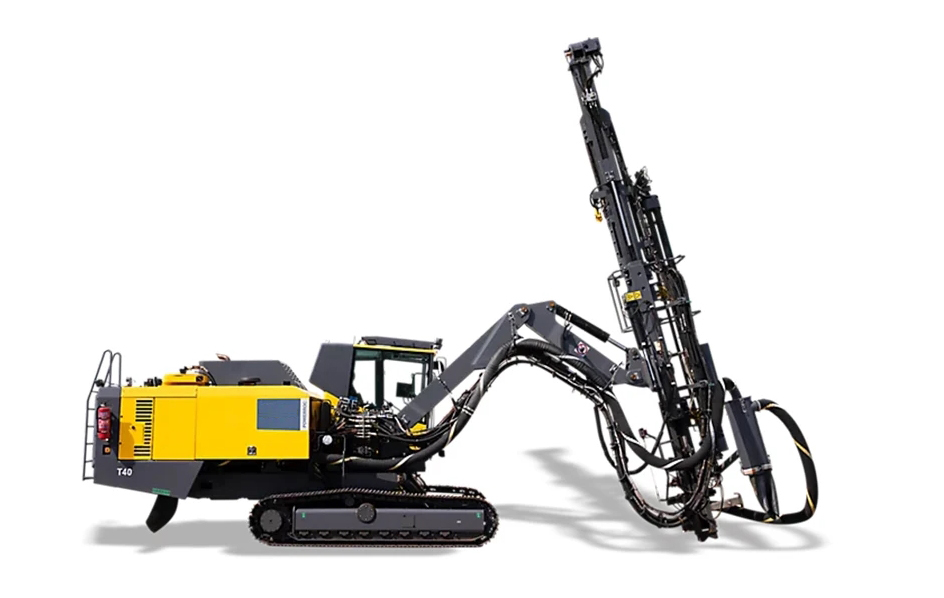
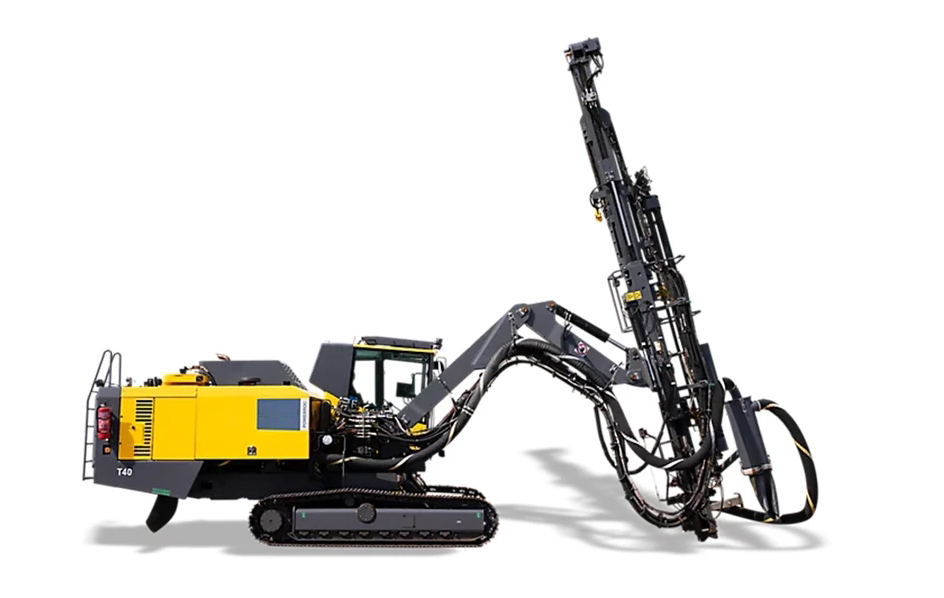
A rock drilling rig is a core piece of engineering equipment widely used in mining, tunnel construction, road and bridge engineering, and quarrying operations. It is specially designed to drill holes in hard rock, concrete, and mineral layers for blasting, anchoring, and exploration. The stable and efficient operation of a rock drilling rig relies on the perfect coordination of dozens of professional parts. Each component undertakes independent and irreplaceable functions, and their working condition directly determines the drilling efficiency, construction safety, and service life of the entire equipment. Classified by functional attributes, the key parts of a rock drilling rig can be divided into power system parts, drilling execution parts, hydraulic and pneumatic parts, and auxiliary structural parts.
1. Core Drilling Execution Parts
Drilling execution parts are the direct working components that contact rock and complete drilling operations, which are the most wearable and core parts of the rock drilling rig. The main components include drill bits, drill rods, shank adapters, and coupling sleeves.
The drill bit is the front-end working part that directly impacts and crushes rock. Made of high-strength alloy steel and embedded with hard tungsten carbide teeth, it can withstand extreme impact force and friction. According to different drilling needs, drill bits are divided into button bits, cross bits, and concave bits, adapting to soft rock, hard rock, and fractured rock layers respectively. The wear degree of the drill bit directly affects the drilling speed; a dull or damaged bit will cause slow drilling, increased equipment load, and even hole deviation.
Drill rods are the connecting rods that transmit power from the rig body to the drill bit. They need to possess high rigidity, toughness, and bending resistance to bear continuous impact, torsion, and pressure during drilling. Standard drill rods have unified thread structures at both ends, which can be stably connected with shank adapters and extension rods. In deep-hole drilling operations, multiple drill rods can be connected in series to extend the drilling depth. Fatigue cracks and thread wear are the main failure forms of drill rods, requiring regular inspection and replacement.
Shank adapters are the transition parts between the impact mechanism and the drill rod. They undertake the key task of transmitting impact energy and rotational torque, and are one of the most stressed components. Coupling sleeves are used to fasten and connect multiple drill rods, ensuring the stability of the overall drilling string and preventing loosening or disconnection during high-frequency impact work.
2. Power and Impact System Parts
The power and impact system provides the core power source for drilling, mainly including impact pistons, cylinder bodies, motors, and transmission gears. This set of parts converts hydraulic or pneumatic energy into mechanical impact force and rotational force, realizing the reciprocating impact and rotary cutting movement of the drilling tool.
The impact piston is the core moving part of the drilling rig’s impact mechanism. It moves rapidly back and forth inside the cylinder body to generate strong impact kinetic energy, which is transmitted to the drill bit to crush rock. Made of high-precision alloy materials, the piston requires extremely high surface finish and wear resistance to ensure stable impact frequency and strength for a long time. The cylinder body forms a closed power chamber with the piston; its internal sealing performance directly affects the power output efficiency. Once the cylinder is worn or the seal fails, the drilling rig will suffer from insufficient power and slow hole drilling.
The driving motor, including hydraulic motor and pneumatic motor, provides rotational power for the drilling tool. It drives the drill rod and drill bit to rotate continuously, so that the drill bit can cut rock uniformly while impacting, avoiding single-point stress and improving drilling regularity. Transmission gears and bearings assist the motor in power transmission, ensuring smooth rotation and stable torque output.
3. Hydraulic and Pneumatic Control Parts
Most modern rock drilling rigs adopt hydraulic or pneumatic drive systems, and the control parts of these systems are the "brain" of the equipment’s operation, mainly including hydraulic valves, air valves, oil cylinders, seals, and pressure gauges.
Hydraulic and pneumatic valves are responsible for controlling the switch, flow rate, and pressure of the power medium. They can accurately adjust the impact frequency, rotation speed, and propulsion force of the drilling rig according to different rock hardness and drilling depths, realizing flexible switching of working conditions. The propulsion oil cylinder controls the forward and backward feed of the drilling mechanism, maintaining stable pressure between the drill bit and the rock surface, which is the key to improving drilling efficiency and reducing tool wear.
Sealing parts such as oil seals and air seals are small but crucial accessories. They prevent the leakage of hydraulic oil and compressed air, ensure the tightness of the power system, and avoid power loss and system failure. Pressure gauges and sensors monitor the operating pressure of the hydraulic and pneumatic systems in real time, helping operators judge the working state of the equipment and avoid overload operation.
4. Auxiliary Structural Parts
Auxiliary structural parts support the overall operation of the rock drilling rig and ensure construction safety and stability, including rig brackets, slide rails, clamping devices, dust removal devices, and walking mechanisms.
The bracket and slide rail form the guiding structure of the drilling rig. They limit the drilling trajectory, ensure straight drilling holes, and reduce hole deviation. The clamping device is used to fix the drill rod, which can quickly clamp and release the drilling tool during rod loading and unloading, improving construction efficiency. The dust removal device is an essential environmental protection and safety part. It removes rock dust generated during drilling through wind pressure or water spraying, reducing dust pollution and protecting the health of operators.
For mobile rock drilling rigs, the walking mechanism and chassis parts support the whole equipment and realize flexible movement on complex construction sites, adapting to different working environments such as mountains, tunnels, and open-pit mines.


